Launch engineRaydium LaunchLab
Graduates toRaydium CPMM
Curve multipleup to 32×
Minimum raise24 SOL
I · The Four Orders

Don't just launch a coin. Design how it works.

Α

Starting Market Cap

Choose the valuation your token opens at, from $10K to $1M+. ARCHITECT turns it into a valid LaunchLab curve or tells you exactly why it can't.

Β

Bonding Curve

Smooth, Balanced, Aggressive, or raw parameters. Every chart is computed with the same integer math the Raydium program runs.

Γ

Fee Architecture

Route your token's share of platform revenue to creator, buyback & burn, and liquidity. It always totals 100%, and every transaction is public.

Δ

Blueprints

Save a launch design as a versioned blueprint. Publish it, reuse it, and see how it performed.

Price path · first buy → graduation14.7×
p₀p₁SOL RAISED →
Graduation raise (F)
II · The Mathematics

Every curve is a proportion

A LaunchLab curve is decided by two numbers: how the supply splits between the curve (s) and the Raydium pool (m), and how much SOL must be raised to graduate (F). Move the slider or pick a raise to see a 1 billion supply launch change in real time.

Start market cap
28.0 SOL
F·(1+√k)/k
Graduation market cap
411 SOL
F·(1+√k)
Price multiple
14.69×
(s/m)²
Sold on the curve
79.3%
s = S·√k/(1+√k)
Kept for Raydium pool
20.7%
m = S/(1+√k)
First 1 SOL buys
34.61M
x₀/(y₀+1), before fees
  • ISteeper curve, cheaper start. At the same raise, an Aggressive curve opens at a lower market cap, so early buyers get more tokens per SOL. Fewer tokens are left for the pool.
  • IIBigger raise, higher valuation. Doubling F doubles both the start and graduation market cap. This is how ARCHITECT hits the starting market cap you ask for.
  • IIIRaydium's limits. At least 20% sold on the curve, 15% kept for the pool, and 24 SOL raised. That caps the multiple near 32×.
III · A Worked Example

One temple, from first stone to graduation

Scroll through a standard launch: 1 billion supply and an 85 SOL raise. Every number is computed with the same integer math the Raydium program runs.

Market cap (SOL) against SOL raisedI
0 SOL85 SOL · graduation
Opening price
2.796e-8 SOL
Opening market cap
28 SOL
On the curve
793.1M
I

The foundation is laid

The creator signs one transaction. LaunchLab mints 1,000,000,000 tokens, puts 793.1M on the curve and holds 206.9M back for the Raydium pool. Nobody has bought yet.

II

The first citizen arrives

Someone spends 1 SOL. After the trade fee they receive 34.4M tokens, 3.44% of the supply. The price ticks up because that SOL now sits in the curve.

III

A quarter of the columns stand

21.3 SOL has flowed in. The first quarter of the raise bought 444.9M tokens, 56% of everything on the curve. Early SOL buys the most.

IV

The roof goes on

At 63.8 SOL raised, each extra SOL buys far fewer tokens. 63.4M tokens are left on the curve. This is the x·y = k curve doing its work.

V

Graduation to Raydium

The last token is sold at 85 SOL. LaunchLab closes the curve and opens a Raydium CPMM pool with the 85 SOL and the 206.9M tokens it held back, so trading carries on at the same price.

IV · The School of Athens

Old ideas, new launches

Six thinkers, six parts of ARCHITECT. Move over a bust to turn it in the light. Each one ends with a real example from the curve.

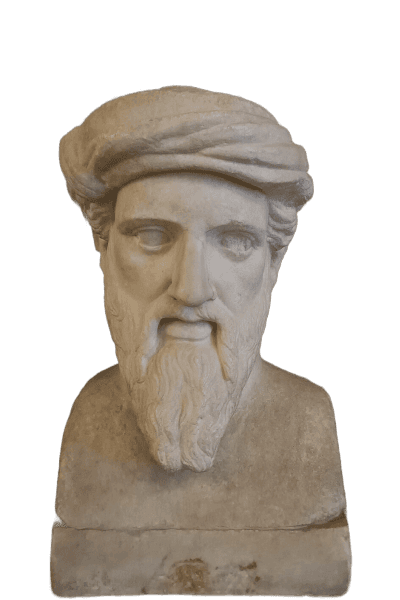
Marble bust of Pythagoras, Capitoline Museums, Rome
ΠΥΘΑΓΟΡΑΣ · c. 570 – 495 BC

PYTHAGORAS

“All things are number.”

A bonding curve is one product kept constant. Every buy takes tokens out and puts SOL in, and the price moves to keep x·y unchanged.

In practice x · y = k

On a standard launch, 1 SOL at the opening buys 34.4M tokens. The same 1 SOL at 75% raised buys only 3.6M.
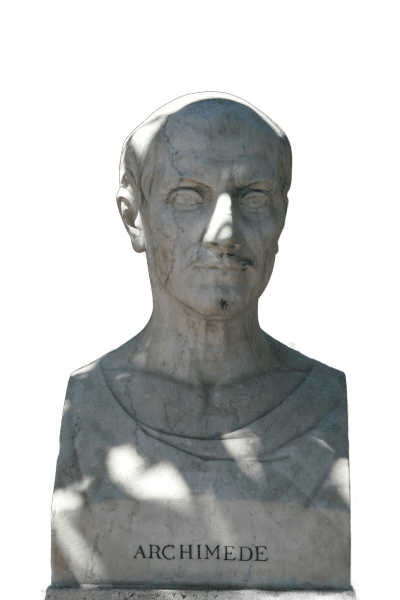
Marble bust of Archimedes, Villa Borghese, Rome
ΑΡΧΙΜΗΔΗΣ · c. 287 – 212 BC

ARCHIMEDES

“Give me a place to stand, and I will move the earth.”

The developer buy is a lever. It goes into the creation transaction itself, and the curve shape decides how far it reaches.

In practice Δa = x₀ · Δb / (y₀ + Δb)

A 2 SOL developer buy with an 85 SOL raise gets 6.66% of supply on a Balanced curve, or 9.79% on an Aggressive one.

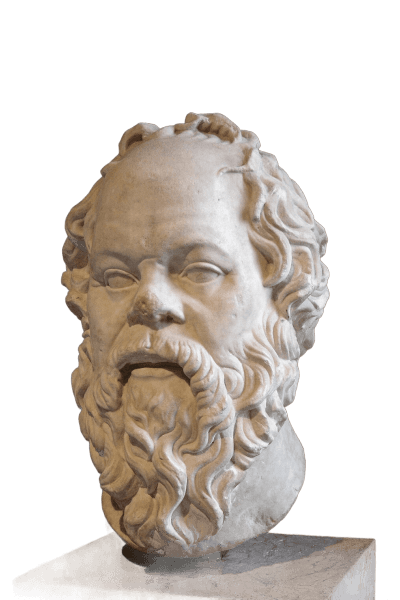
Marble head of Socrates, Louvre
ΣΩΚΡΑΤΗΣ · c. 470 – 399 BC

SOCRATES

“I know that I know nothing.”

The simulator is exact about the mechanics and silent about demand. It shows what a trade does to the curve, never whether the trade will happen.

In practice estimate ≠ prophecy

A 10 SOL buy at the opening of a standard launch moves the price 77% and buys 266.7M tokens. That is certain math. Whether anyone makes that buy, nobody can know. The floor is also fixed: a Balanced curve cannot open below 7.9 SOL of market cap, because Raydium needs at least a 24 SOL raise.

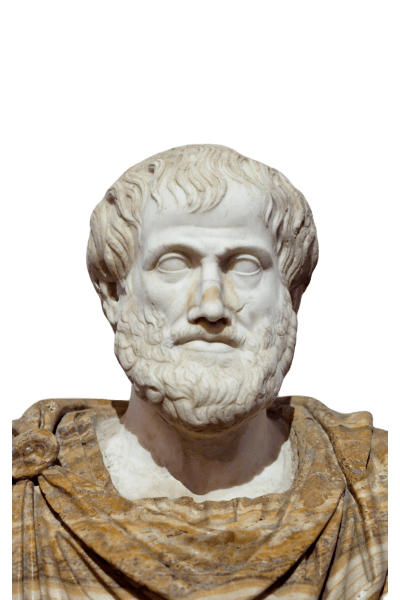
Bust of Aristotle after Lysippos, Palazzo Altemps, Rome
ΑΡΙΣΤΟΤΕΛΗΣ · 384 – 322 BC

ARISTOTLE

“The whole is greater than the sum of its parts.”

Fee Architecture splits your token's share of platform revenue between modules, and the parts always add up to exactly the whole.

In practice Σ shares = 100%

If 100 SOL trades through a token, its 0.3% Fee Architect budget is 0.30 SOL. A Balanced split (40/30/30) routes 0.12 SOL to the creator, 0.09 SOL to buyback & burn and 0.09 SOL to liquidity.

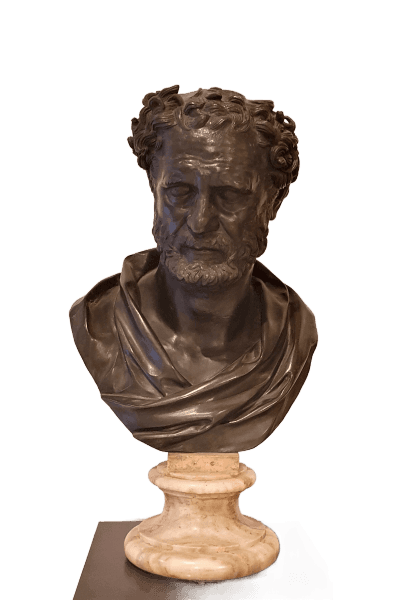
Bust of Heraclitus
ΗΡΑΚΛΕΙΤΟΣ · c. 535 – 475 BC

HERACLITUS

“Everything flows.”

On-chain, a launch is priced in SOL. Dollar values flow with the SOL price, so the builder shows both and says which one is fixed.

In practice MC$ = MC◎ · SOL/USD

A standard launch opens at 28.0 SOL. That is $2,237 when SOL is $80, and $5,592 when it is $200, with the same curve and the same tokens.

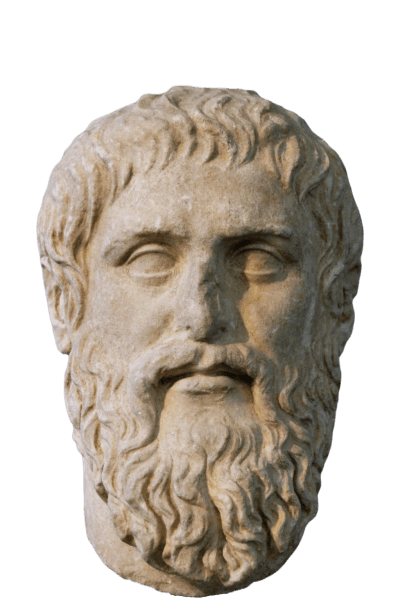
Portrait of Plato after Silanion, Capitoline Museums, Rome
ΠΛΑΤΩΝ · c. 428 – 348 BC

PLATO

“Every thing is a copy of its ideal Form.”

A Blueprint is the ideal form of a launch: valuation, curve, graduation and fees, saved once and used many times.

In practice launch = blueprint(vₙ)

Each launch stores a frozen copy of the blueprint version it used, so editing a blueprint later can never change a token that already exists.

Sculpture photographs from Wikimedia Commons: Pythagoras (Cmick25, CC BY-SA 4.0) · Archimedes (Mini.fb, CC BY-SA 3.0) · Socrates (Wikimedia Commons, Public domain) · Aristotle (Jastrow, Public domain) · Heraclitus (Yair Haklai, CC BY-SA 4.0) · Plato (Marie-Lan Nguyen, Public domain).

V · Official Blueprints

Start from a proven plan

All blueprints →
VI · Questions at the Agora

Asked and answered

IWhy can't I pick any starting market cap I want?+

On Raydium LaunchLab the opening price follows from the curve: p₀ = F·m/s². ARCHITECT keeps your curve shape and solves for the graduation raise F. A higher start therefore needs a bigger raise, and Raydium needs at least 24 SOL. If a request is impossible, the builder says why and offers the closest valid design.

IIWhat do Smooth, Balanced and Aggressive actually change?+

Only how the supply splits between the curve and the Raydium pool. That split sets how far the price climbs from the first buy to graduation (about 4×, 14.7× and 30×). Raydium's public SOL config has one curve type, constant product; these presets are ARCHITECT's names for points on it.

IIIWhat happens at graduation?+

When the raise target is reached, every token on the curve has been sold. LaunchLab closes the curve and seeds a Raydium CPMM pool with the raised SOL and the tokens it held back. Trading continues there at the same price.

IVWhere do trading fees go?+

Each curve trade pays 0.75%: Raydium's protocol fee of 0.25%, which is never routable, and ARCHITECT's 0.5% platform fee. There is no extra creator fee. Of the 0.5%, 0.2% is ARCHITECT revenue and 0.3% is your token's Fee Architect budget, split between creator revenue, buyback & burn and liquidity growth. After graduation, all LP is permanent: 80% is burned and 20% is locked in Raydium Burn & Earn, and the pool's 0.05% creator fee feeds the same design.

VAre buyback & burn and liquidity growth live?+

Yes. The ARCHITECT vault claims the platform fee and executes each token's design from its own ledger: SOL to the creator, buybacks burned from the vault, and after graduation liquidity added to the pool with the LP burned. Liquidity is held until graduation, because a curve has no pool to add to. Every transaction is listed on the token's page.

VIIs the simulator exact?+

It uses the same integer math as the Raydium SDK, checked by tests down to the lamport. It can tell you what a given trade does to the curve. It cannot tell you how many people will buy, so read every number as an estimate of mechanics, not of demand.

VII · Dedication

Every launch starts with a blueprint.

Set the valuation, the curve, the graduation and where the revenue goes. Simulate all of it before you commit a single lamport.